
Rural property trends: Karnataka Updates
A note on numbers: we don't publish price indices, and we'd rather say nothing than quote a figure we can't stand behind. Rural land in this region is thin-traded and hyper-local — two plots a kilometre apart can differ by a wide margin for reasons that never show up in an average. Everything below is about direction and structure, not price. For a specific plot, get a local valuer.
1. The buyer pool for agricultural land is far wider than it was
For decades, Karnataka placed real limits on who could buy agricultural land. Sections 79A and 79B of the Karnataka Land Reforms Act restricted purchases by people with non-agricultural income above a threshold, and by non-agriculturists generally.
The Karnataka Land Reforms (Amendment) Act, 2020 removed those restrictions. The practical effect is straightforward: a much larger group of people can now buy agricultural land in the state than could before.
What it means if you're buying: the field is more competitive than long-time local buyers may expect, particularly for accessible, well-documented parcels.
What it means if you're selling: your likely buyer may no longer be the neighbouring farmer. They may be a first-time land buyer from a city who needs the paperwork to be clean and legible, and who will walk away from ambiguity that a local buyer might have worked around.
What hasn't changed: land ceiling limits still apply, and the rules on what you may do with agricultural land are untouched. Buying it is easier; building on it still requires conversion. And under FEMA, NRIs and OCIs still cannot buy agricultural land, plantation property or farmhouses in India — that restriction is separate and remains in force.
2. Documentation quality has become a price factor in its own right
This is the change we notice most in day-to-day listings. Two comparable parcels, similar access, similar soil — one moves, one sits. The difference is usually paperwork.
A parcel with a clean 30-year encumbrance record, completed mutation, current tax receipts and a survey sketch that matches the fence line is now a genuinely different product from one where the chain of title has a gap.

If you're selling: the highest-return work you can do before listing is usually not cosmetic. It's closing the mutation, pulling a fresh EC and having a licensed surveyor mark the boundary. This is unglamorous and it moves deals.
3. Buyers are arriving with the state portals already open
Land records that once required a trip to a taluk office are now online. Karnataka's Bhoomi system for RTC extracts and the Kaveri portal for registration and encumbrance certificates mean a buyer can do a meaningful first pass from their phone before they ever call the seller.
The consequence is a shift in when scrutiny happens. It used to come late, after a token advance, when an advocate was finally engaged. Increasingly it happens before first contact.
Practical effect: listings that are vague about survey number, extent or tenure get filtered out early — not because the property is bad, but because the buyer can't start their own check. Specificity in a listing is now doing work that a phone call used to do.
4. Plantation land is being valued on two separate logics
In Kodagu especially, coffee and arecanut land is increasingly assessed by buyers in two different ways, and they don't produce the same answer:
- As a working agricultural asset — yield, age and health of the plantation, shade trees, water security, labour availability, and the volatility of commodity prices.
- As land with amenity and location value — views, climate, road access, proximity to a town, and what the surrounding area is likely to look like in ten years.
A buyer weighing the first will discount an ageing plantation. A buyer weighing the second may barely price it. The same parcel can therefore attract very different offers, and sellers sometimes read the higher one as the market rate when it reflects one buyer's particular thesis.
If you're selling plantation land: know which buyer you're talking to. The documentation, the questions and the negotiation all differ.
5. Water security is doing more of the work in pricing than it used to
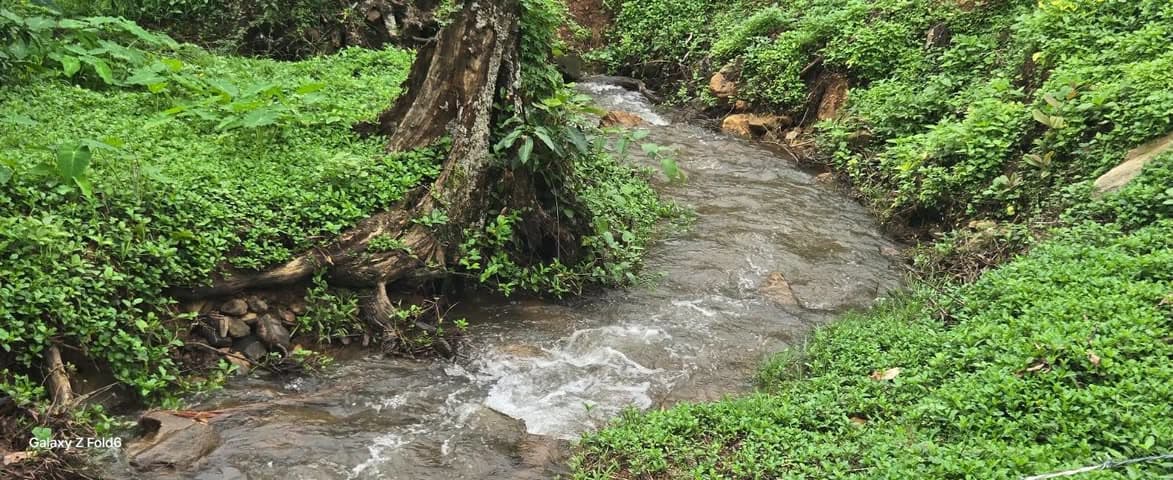
Across both districts, buyers ask earlier and harder about water: borewell depth and yield, open wells, stream access and whether it runs year-round, and what neighbouring extraction looks like.
This isn't new as a question. What's changed is that it now often comes before price discussion rather than after, and buyers increasingly want to see it in the dry months rather than take a monsoon-season assurance.
A practical point for buyers: a site visit in June tells you very little about April. If you can only visit once, ask specifically what the source looks like at the end of summer, and talk to a neighbour rather than only the seller.
6. Homestay and tourism use has changed what some buyers are optimising for
Kodagu's homestay and small-hospitality sector has shaped a category of buyer looking for something quite specific: motorable access in monsoon, power reliability, a view, and proximity to a route people already travel.
This is worth understanding for two reasons.
First, it means some parcels attract interest that has little to do with agricultural merit — a smaller, steeper plot with a view can draw attention that a larger, flatter, more productive one doesn't.
Second, and more importantly: tourism use is a regulatory question, not just a commercial one. Homestay operation is subject to registration and local rules, agricultural land cannot simply be built on, and permissions vary by location — including in ecologically sensitive areas, where restrictions can be significant. If a listing's appeal rests on a tourism plan, that plan needs checking with the local authority before money moves, not after.
7. Connectivity keeps redrawing the map, slowly
Improvements to the Bengaluru–Mysuru corridor and the road and rail links towards Mangaluru have gradually changed how far "reachable for a weekend" extends from both cities.
The honest version of this trend is that it's slow and uneven. Infrastructure announcements are not infrastructure, and timelines slip. But sustained travel-time reduction along a corridor does, over years, change which villages are on someone's shortlist.
A caution worth stating plainly: buying land on the strength of an announced project is speculation, and it should be recognised as such. A proposed alignment can also destroy value — land inside a road-widening reservation or buffer zone looks entirely normal on site and is a well-known trap. Verify the zoning and the Master Plan for the specific survey number, not the district.
What this adds up to
If there's a single thread running through all seven, it's that the rural land market in this region is becoming more legible — more documented, more searchable, more scrutinised — and that legibility rewards sellers who prepare and buyers who verify.
If you're buying:
- Do the free online checks before you fall in love with a place
- Get a 30-year EC and an independent legal opinion; it's the cheapest insurance in the transaction
- Visit in the dry season, and talk to a neighbour
- Treat any future-infrastructure story as speculation, not as value
If you're selling:
- Close your mutation and clear tax arrears before listing
- Have the boundary surveyed and the sketch reconciled with what's on the ground
- Be specific in your listing — survey number, extent, tenure, access
- Expect a buyer who checks, and price the friction you remove
Our Property Buying Guide for India walks through the nine core documents in the order a buyer should actually check them, including what a red flag looks like at each step.
Written by the CornerSite team. This is general information about market direction, not legal, tax or investment advice, and it isn't a recommendation to buy or sell. Rules and rates vary by state and change over time — confirm current requirements for your specific property with a local advocate and a chartered accountant before you transact.